


What Matters Most: Rick Rasmussen’s Return Has the Utah Falconz Flying Again
- May 6
- 4 min read
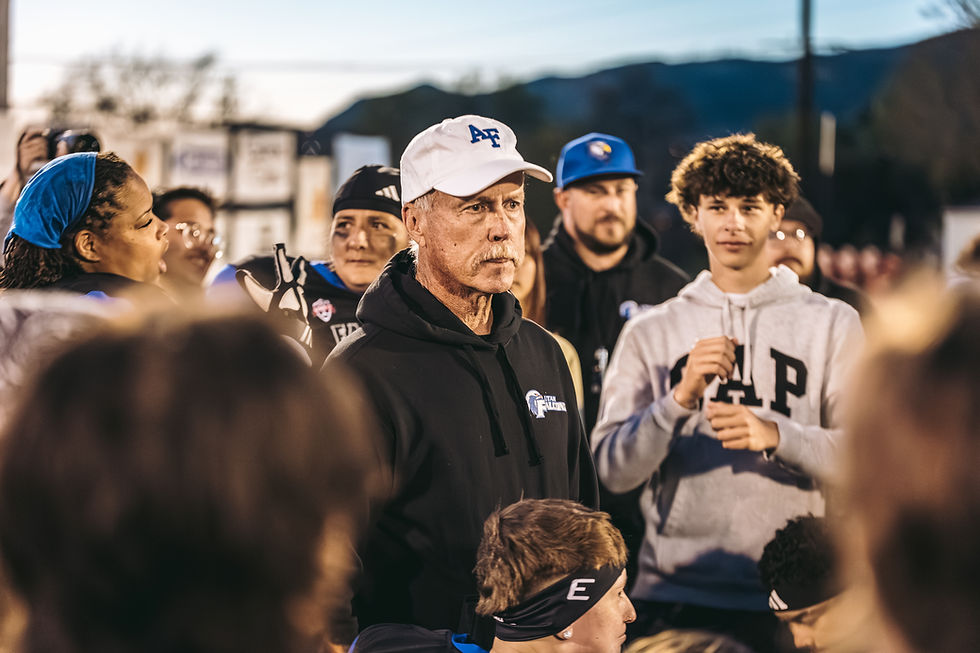
For years, the Utah Falconz represented one of the most consistent truths in women’s tackle football: if you lined up across from them, you were going to be tested physically, mentally, and emotionally for four quarters. They were disciplined. Ruthless. Unselfish. Built to outlast you.
And at the center of it all stood Rick Rasmussen.
Long before the rise of national broadcasts, major brand sponsorships, and sold-out championship weekends in the Women's National Football Conference, Rasmussen was building a football culture in Utah that would become one of the defining programs in the history of the sport.
Now, entering the final weeks of the 2026 regular season, the Falconz once again look like one of the most dangerous teams in the league, and the resurgence has everything to do with the return of the coach who built the foundation in the first place.
This season is not simply about football for Utah. It is about identity. Legacy. Grief. Leadership. And the power of returning when the people who need you most call you back home.
The Falconz are one of the founding franchises of the WNFC and one of the original standard-bearers for professional women’s tackle football. In the league’s inaugural 2019 season, Utah stormed through the Western Conference and earned a trip to the first-ever IX Cup Championship Game against the Texas Elite Spartans. The matchup became an instant classic, with Utah narrowly falling 19–14 in a bruising championship battle that still lives in league history.
Even in defeat, the Falconz established themselves as one of the sport’s premier organizations. Their identity was unmistakable because Rasmussen’s fingerprints were on every detail of the program.
For years, the Falconz operated one of the most feared triple-option offenses in football. Across multiple leagues and eras, opponents knew exactly what Utah wanted to do and still struggled to stop it. Rasmussen’s teams were relentless in their execution. Every player had an assignment. Every block mattered. Every motion carried purpose. The offense was less about flash and more about trust, discipline, and punishment over time.
But people inside the organization will tell you the scheme was never the real story. Rick Rasmussen built culture first.
To outsiders, Rasmussen developed a reputation as a hard-nosed, no-nonsense football coach who demanded accountability and discipline from every player who entered the program. But to those who played for him, he became something more meaningful.
Under Rasmussen, the Falconz became one of the most respected locker rooms in women’s football because every player understood the standard. No one was bigger than the team. No one was entitled to success. Buy-in was mandatory. Sacrifice was expected.
And for years, Utah won because of it.
But after a defining loss in the 2022 IX Cup Championship Game, Rasmussen stepped away from coaching to pursue a well-earned retirement. For the first time in franchise history, the Falconz had to imagine themselves without the coach who built them.
The years that followed were some of the most difficult the organization had experienced.
From 2023 through 2025, Utah cycled through head coaches while searching for stability and a new direction. The consistency that once defined the Falconz began to fade. The swagger disappeared. For the first time in WNFC history, Utah missed the Western Conference playoffs.
For most franchises, missing the postseason would simply represent a disappointing year. For the Falconz, it felt deeper than that. The organization had lost its rhythm. More importantly, it had begun to lose the identity that made Utah football different.
Then, in 2025, there was hope again.
Longtime Falconz coach Cecil Chang took over the program and immediately reconnected the team to its roots. Chang understood the culture because he helped build it alongside Rasmussen for years. Players responded to his leadership, and the program began showing signs of life again.
But before the vision could fully materialize, tragedy struck.
On July 21, 2025, Cecil Chang passed away unexpectedly, leaving the Falconz devastated and once again searching for direction. The loss shook the organization far beyond football. Players, coaches, and supporters mourned not just a coach, but a mentor and family member who had poured years into the Falconz community.
And in that moment of uncertainty, the program turned back to the man who had built it all. Rick Rasmussen returned.
Not for headlines. Not for recognition. Not to prove anything. He returned because his people needed him. That reality is what makes this season feel different.
Yes, the Falconz are once again one of the best teams in the WNFC. Yes, they appear poised to make a legitimate IX Cup Championship run. But those around the organization understand this season carries a much deeper meaning than wins and losses. This may be the finest coaching work of Rasmussen’s career. Not because the team is dominant. Because the team is whole again.
The current Falconz reflect everything Rasmussen has always believed football should be. Utah does not rely on individual stars or highlight-driven football. The program is built around collective responsibility. Every player matters. Every role matters. Every rep matters.
Inside the Falconz locker room, there is a belief that championships are not won by talent alone. They are won through trust, sacrifice, and commitment to something bigger than yourself. That philosophy has returned in full force this season.
Utah plays with the confidence of a team that knows exactly who it is again. The offense is disciplined. The defense is punishing. The sideline is connected. And the culture that once made the Falconz one of the defining organizations in women’s football has reemerged.
But perhaps the most important thing Rasmussen has shown during this return is that leadership evolves. Earlier in his career, he became known for building tough football teams. In this chapter, he is showing the full depth of what leadership actually means.
Sometimes leadership is calling people higher. Sometimes leadership is demanding accountability. And sometimes leadership is simply being present when people need you most.
That is the story of the 2026 Utah Falconz. A founding franchise rediscovering itself. A grieving organization finding stability again. A legendary coach answering the call one more time.
As the postseason approaches and the race intensifies, the rest of the WNFC is once again being reminded of something it learned years ago:
When Rick Rasmussen’s Falconz know exactly who they are, they become extraordinarily difficult to beat.
Saturday May 9, the Falconz take on the Seattle Majestics in a Northwest Division showtown. Tune in live on Victory+


Comments